
Oseibo Japanese Year End Gift 2025

Updated: Dec 5, 2025
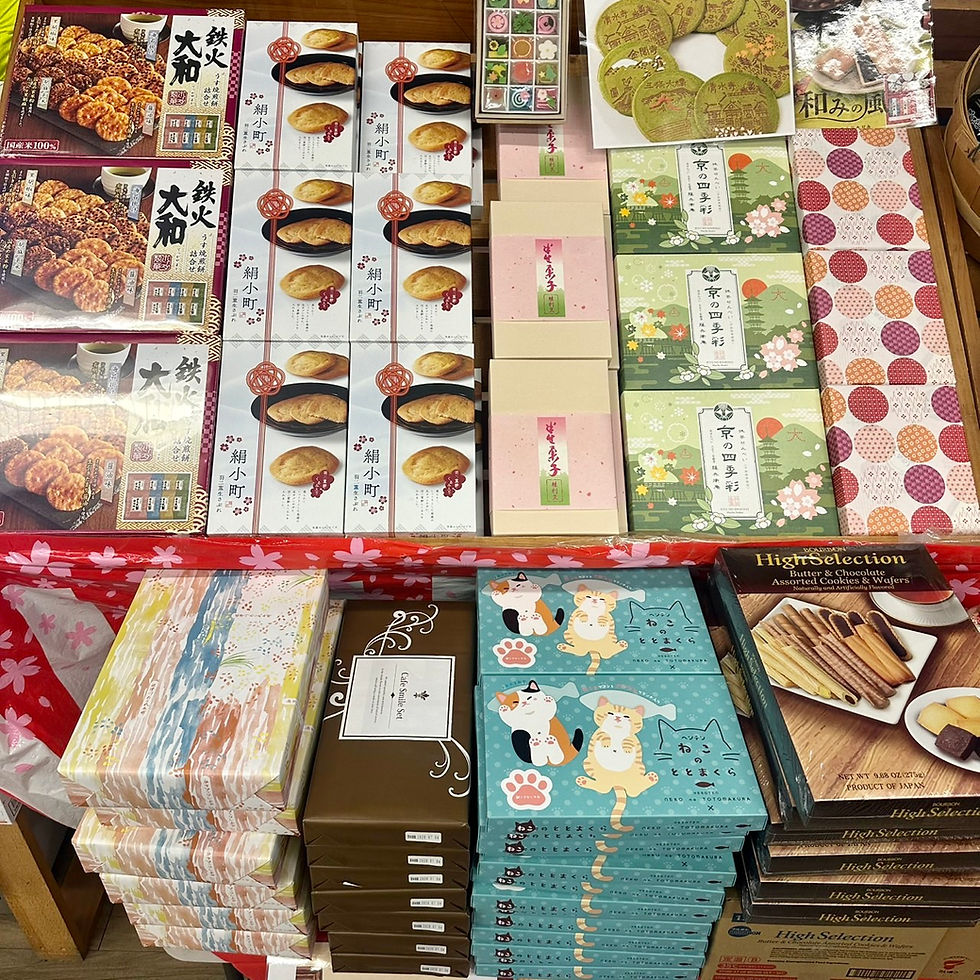
Hello everyone. December is here, and before we know it, the year 2025 will be coming to an end. What kind of year has it been for you? When you look back on this past year, can you picture the faces of those for whom you are thankful?
In Japan, there is a gift-giving culture called oseibo. It is a way of saying thank you very much for all your help and kindness this year, and I look forward to seeing you again next year. It is a gift given to those who have taken care of you this year as a token of gratitude for the past year and best wishes for the next year. Originally, the word seibo was used to express the end of the year, and in the world of haiku Japanese poetry, it is the seasonal word for the month of December.
At Maido, we have stocked oseibo gifts again this year. We have many items that are not usually available at our store. They are in very nice packaging, as they are made as gifts. You can enjoy them visually, then enjoy the flavors. You can get them not only for someone you appreciate, but also for yourself to be thankful for a great year! Today, we will introduce the oseibo products we offer. Read this and come to Maido to get gifts for people you appreciate!
Oseibo Gifts Maido Currently Offers
Glico, Pocky Holiday Bundle 9 Packs
Indulge this season with Glico's limited time holiday bundle. Make every moment a little sweeter and more delightful by sharing this Pocky and Pejoy special collection. It includes 9 different flavors - Pocky Chocolate, Strawberry, Cookies & Cream, Matcha, and Banana + Pejoy Chocolate, Matcha, and Mint. Pocky and Pejoy are both Japanese biscuit stick snacks but they have a key difference: Pocky has a flavored coating on the outside, while Pejoy is a tube-shaped biscuit filled with a creamy flavor on the inside.

Kawachi Surugaya, Yuzen-An Yokan
Yokan is a Japanese sweet bean paste jelly made of red bean paste, agar, and sugar. The elegant and cute individual wrappings decorated with Yuzen designs are appealing. This stylish design has changed the impression of the traditional yokan. You can enjoy four flavors in one box - tsubuan (chunky sweet red beans), green tea, plum, and chestnut.
Kawachi Surugaya, Nagomi no Kaze
It is an assortment of yokan, handmade monaka, shiruko, and kuzuyu. Yokan is the same as the one above (Yuzen-An Yokan). There are two different types of yokan in this assortment. Handmade monaka is a Japanese sweet made of azuki bean paste sandwiched between two thin crisp wafers made from mochi. Shiruko is a sweet porridge of azuki red beans boiled and crushed. Kuzuyu is an arrowroot tea made of Japanese arrowroot starch, water, and sugar. There are three different flavors of shiruko and kuzuyu in this set. They will warm your heart and body. Each product is made with richly flavored ingredients and craftsmen's skills, using traditional methods.

Katsura Rikyu, Han-nama Gashi
It is a very authentic Kyoto confectionery with the seasonal atmosphere of Kyoto laid out in a box. You can enjoy the masterpieces created by skilled craftsmen. Don't they all look beautiful? Each one looks like an art piece. You can enjoy them as decor first, then eat them!

Tsuyamaya Seika, Kinoka Iroiro (right)
It is a box with ministry of seasonal agar Japanese confectionery. You can enjoy an assortment of yuzu-mochi, awayuki strawberry, umeshu (plum wine) jelly, kuzumochi matcha azuki (red beans), and kurikinton (sweetened chestnuts). It comes in a cardboard box and is shrink-wrapped. It has a relatively heavy weight and is ideal as a fancy gift.
Wakao, Hesoten Neko no Totomakura
It is an assortment of soymilk sable cookies in the shape of cats sleeping in cute poses, and fish shaped crunchy milk chocolates. It is a perfect gift for cat lovers. The gift receiver must get very happy just by looking at them. Hesoten is a posture in which a cat lies on its back and shows its belly. Toto means fish and makura means pillow.
Nakayama Seika, Cafe Smile Set
This is an assortment of baked goods including Russian cakes (macaron strawberry, flower kiwi, and rich bitter flavors), petit gâteaux (strawberry, milk chocolate, and white chocolate flavors), sandwich cookies (sesame, cocoa, and vanilla flavors). They are perfect for an elegant tea time.
Bourbon, Mt. Fuji Alfort
This is a chocolate biscuit shaped like the snow-capped peak of Mount Fuji, a World Heritage site and symbol of Japan, featuring the perfect combination of digestive biscuit and chocolate. It makes an ideal gift.

Bourbon, High Selection
It offers seven kinds of cookies and two flavors of wafers, each with its own unique taste - cocoa lemmande, chocolate chip cookie, chocoliere, chocolate elise, white chocolate elise, choco-in cookie, butter cookie, choco-crepe, and butter roll. They are packaged individually so that you can eat as much as you want, whenever you want.
Sanritsu Seika, Figaro
It is an assortment with cookies and pies - Japanese pastries that are buttery and very crunchy with a lot of layers. It includes chocolate pie, raisin pie, white chocolate sandwich cookies, chocolate sandwich cookies, and coconut cookies.

Bourbon, Roanne Selection
This is a combination of gaufrettes - wafer sandwiches with cream in between that resemble Belgian waffles. Gaufrettes are a classic Japanese gift confectionery with a crispy and gentle texture and aroma. This assortment includes three classic gaufrette flavors - vanilla, chocolate, and strawberry. The dark blue and gold packaging gives the gift receivers a luxurious feel, making this product suitable not only as a casual gift, but also for formal occasions that require a certain level of prestige.
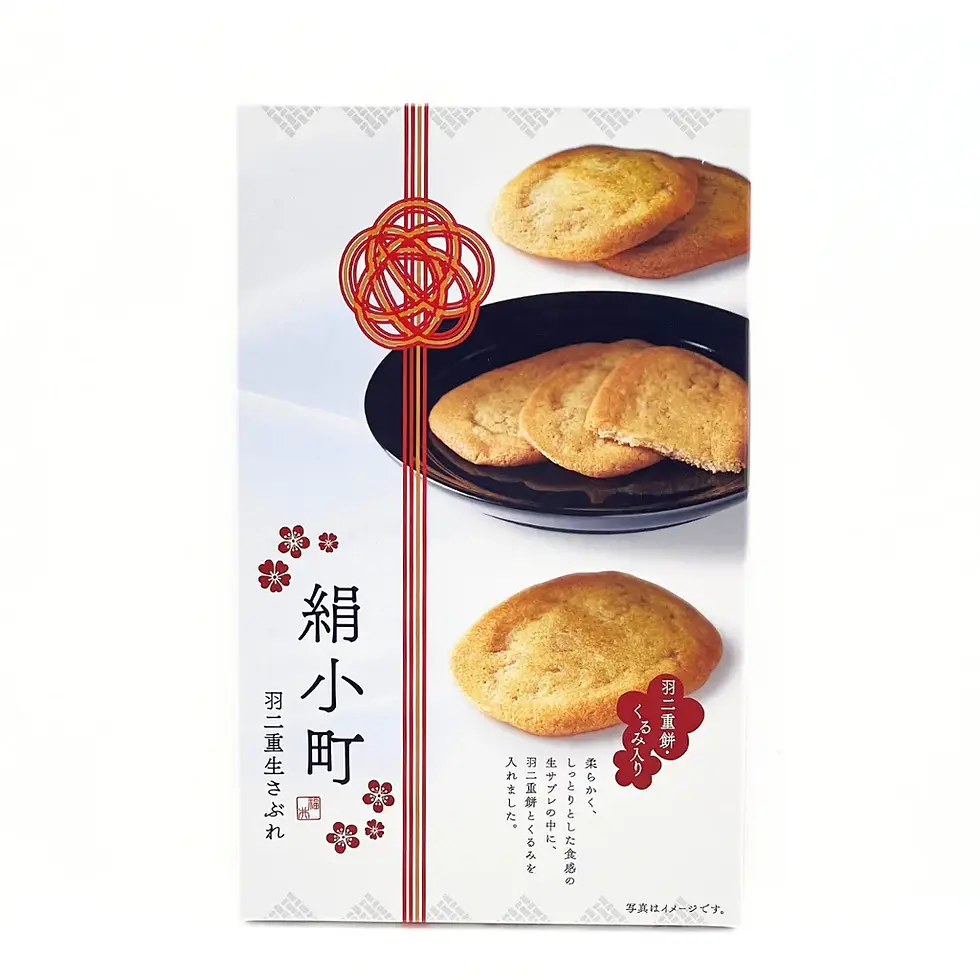
Aratama, Kinu-Komachi Walnut
This is a moist baked pastry made of habutae mochi rice cake kneaded with plenty of walnuts and wrapped in sable dough. Habutae mochi is a Japanese confectionery from Fukui Prefecture, made from only glutinous rice flour, sugar, and starch syrup. It is derived from habutae, a silk fabric that is a specialty of the prefecture, and is characterized by its silky smooth texture that melts slightly in the mouth. You can enjoy the soft and gooey texture of these baked pastries. The walnuts give you a unique texture by being added in the soft sable cookies.
Kyosagahorakuan, Kyoto Matcha Cookies
It is an adorable rabbit-shaped cooky made with Kyoto matcha. With one bite, a subtle sweetness and the flavor of matcha gently spread across your palate. The plump belly part of the rabbit offers a satisfyingly crisp yet smooth texture.
Seki Seika Honpo, Kyo no Shikisai
This is a product full of Kyoto-like characteristics, with matcha rice crackers branded with four famous spots of Kyoto - Kiyomizu-dera Temple, Sanjo Ohashi Bridge, Arashiyama, and Kinkaku-ji Temple, and the four seasons of Kyoto expressed with surimitsu (honey) on top of the branding. You can enjoy the taste of Kyoto not only with the flavor of the rice cracker, but also with your eyes. Seki Seika Honpo is a confectionery company that has been dedicated to the production of Kyoto rice crackers since its establishment in 1922. They have been carrying on the tradition of quality for generations with the philosophy of creating products that bring smiles to their customers' faces in pursuit of delicious taste and safety and security, and contributing to a bright and peaceful society through the production of confectioneries.
Watanabe Hohana Asobi Senbei
This box contains single-serving packs, each filled with various types of arare rice crackers. From rich soy sauce crackers to coarse sugar crackers, you can enjoy a variety of flavors all at once.

Honda Seika, Tekka Yamato Rice Crackers
This assortment includes four varieties of rice crackers made with 100% Japanese non-glutinous rice: soy sauce flavor, sesame brown rice, nori-topped, and black pepper flavor. The company has been around since 1954 and their rice crackers have very traditional Japanese flavors.
Nikko Okaki Kobo, Takumi no Kokoro Rice Cracker Nikko Okaki Kobo is committed to use rice only from Japan. Also, they use the water from Nikko in Tochigi prefecture which is melted snow from the Nikko Mountain Range. The cold melted water that flows from the mountains becomes subsoil water, which is refined under the earth over a long period of time, and is said to be the most delicious water in Japan. Their traditions are handed down from generation to generation. This assortment is a combination of four products - Noriko-san with seaweed, goma-zuki with roasted sesame seeds, komochi salad with garlic and chili pepper, and teriyaki senbei.
Oseibo Q & A
Q. When is the best time to send oseibo gifts?
A. It is common to send oseibo between December 13th and December 20th, but the standard timing for sending them differs depending on the regions. In the Kanto region (Tokyo area), the gifts should be delivered between early December and December 31, while in the Kansai region (Osaka area), they should be delivered between December 13, the beginning of the preparation for New Year, and December 31, the end of the year. Therefore, there is no problem if the gifts are delivered by December 31st. However, to avoid overlapping with the busy year-end season, it would be better if they were sent from around early December to December 25th, at the latest. Recently, many people started sending gifts in mid-November. If you miss the time, you can send them as New Year's gifts during the Matsunouchi period (by January 7th in most areas, and 15th in Kansai) or as Kanchu Oukagai gifts after that until Risshun (the first day of spring, which is Febrary 4th in 2026).
Q. How do I present an oseibo gift in a pleasant manner?
A. The official way is to ask about the recipient's schedule in advance and bring the gift to the recipient's home, but in recent years, delivery has become more common. Even in this case, it is advisable to send a letter or a postcard to the recipient, expressing your gratitude and your recent situation, to make a good impression to the recipient. If the gift is for a very close friend or relative, a phone call to let them know of the gift is acceptable.
Q. What should I do if I receive an oseibo gift?
A. It is a good manner to respond to the thoughtfulness of the recipient as soon as possible. After receiving the gift safely, it is common to send a thank-you card or letter. If you are very close to the recipient, or if you want to let them know that you have received their gift as soon as possible, you can call or send a text message or an e-mail. Since the oseibo is a token of gratitude, there is no need to return the thought with another gift. However, if you receive a gift from a friend, colleague, or an unexpected person, it is a good idea to give a gift in return of the same amount of price or contents.
Q. What is the history of oseibo?
A. It is said that the oseibo custom originally started when offerings to the spirits of ancestors were distributed to relatives and neighbors at the end of the year. In Japan, there was a custom called Goryo-Matsuri to welcome the spirits of ancestors during the New Year. It is said that the oseibo used to be brought to the family by a daughter that got married and left the house or by someone from a branch of a family to the head of the family as an offering for the Goryo-Matsuri.
***
We hope this article helps you choose your oseibo gifts. Each item is available in limited quantities. Come visit us to grab them soon!
***
There is a lot of food items, housewares, stationery, and gifts available at the store and our online store, Maido! Kairashi Shop, where you can place your order for shipping or store pickup! Happy shopping. :)


Comments